
QS Series
QS Series Suspended Roller Cement Pipe Production Line
One wet line, many pipe profiles: suspended roller forming for water and drainage work.
View details
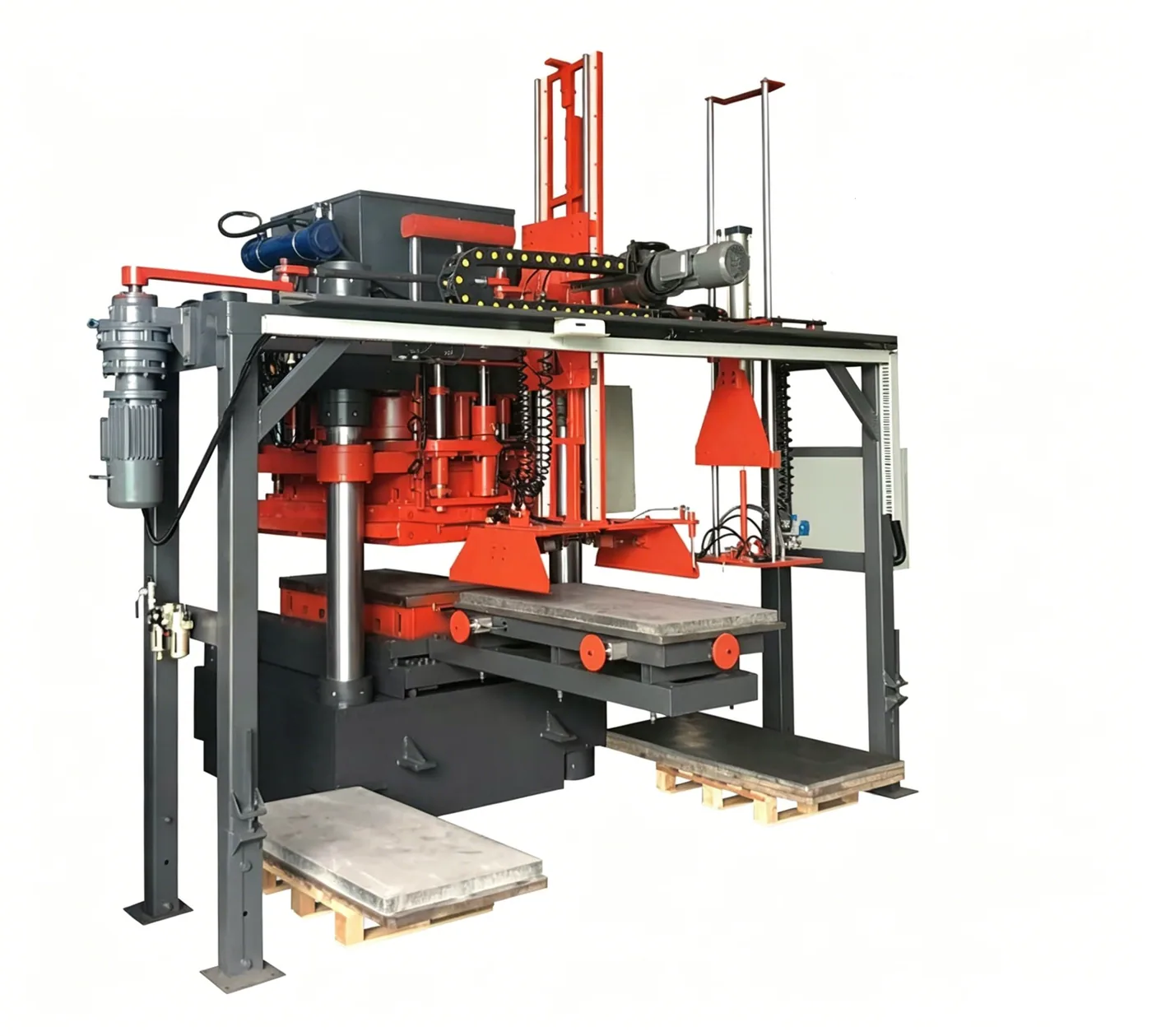
High-pressure filtration molding shapes mortar concrete into dense artificial stone slabs.
In artificial stone and precast concrete production, the pressure and compactness achieved during slab forming decide the strength, surface texture and market value of the finished panel. The FSD-A series large slab forming machine is built around high-pressure filtration molding of mortar concrete. A mix of aggregate, cement and admixtures is distributed evenly in the mold, then a hydraulic system applies high pressure and filters out water so the aggregate particles lock tightly together into a dense blank. After forming, the slab is demolded automatically and carried by a transport platform to the curing stage, which allows continuous rather than batch operation. Controlling porosity also improves waterproofing and impermeability, so later grinding and polishing stages start from a sound blank. The FSD-A model matrix covers small, medium and large production scales, letting producers match forming capacity and strength requirements to the panels they actually sell. Panels formed this way hold their shape through curing and finishing, so a plant can run a fixed product range with predictable reject rates.
<h2>Why Forming Pressure Matters</h2><p>Artificial stone and P.C stone panels are judged on strength, density and surface consistency. In a large panel, pressure control during forming decides all three. A panel that is formed without enough compaction traps air and water, cracks later under load and shows a poor surface after polishing. This machine addresses that by making high pressure the centre of the molding process rather than an afterthought.</p><h2>The Filtration Molding Principle</h2><p>The FSD-A series uses high-pressure filtration molding for mortar concrete. Instead of only pressing the mix, the process applies hydraulic pressure that also drives water out of the mold. Water removal is what allows the aggregate particles to pack tightly and form a dense, uniformly strong blank. That is the difference between a panel with controlled porosity and one that simply looks solid at the surface.</p><h2>Step by Step Workflow</h2><p>First, the mortar concrete mixture, made from aggregates, cement, admixtures and other ingredients, is placed and spread evenly in the forming mold. Even distribution matters because local variation in the mix shows up later as strength differences and surface defects. Second, the hydraulic system applies high pressure and performs filtration inside the mold, removing moisture and compacting the aggregate into a dense panel blank. Third, the blank is demolded automatically and carried by a transport platform to the next curing stage, so the machine runs in a continuous loop rather than stopping for each panel.</p><h2>What the Process Delivers</h2><p>High-pressure filtration molding raises compactness and compressive strength, which reduces the risk of cracking and deformation once the panel is installed. It also gives effective control over porosity, improving waterproofing and impermeability. For a producer, those properties matter twice: they decide whether the panel passes a customer inspection, and they decide how much material is lost to rejects before the grinding and polishing stages. Density also affects how the panel behaves after installation. A slab that is compacted evenly resists staining and water ingress better at its edges, where thin sections are most vulnerable, and it holds its surface texture through years of use.</p><h2>Model Range and Production Fit</h2><p>The FSD-A series is offered as a model matrix covering small, medium and large production scenarios, so a producer can match forming capacity to the panel sizes and strength grades actually being sold. Artificial stone and PC stone panel manufacturers use the series where they need repeatable, high compaction across a full shift and consistent blanks feeding into grinding, polishing and curing.</p>
Tell us your target output and the raw materials you have, and we will send a detailed quotation.
| Parameter | QS FSD-A |
|---|---|
| Model | QS FSD-A |
| Series | FSD-A |
| Molding Technology | High-pressure filtration molding for mortar concrete |
| Pressure Source | Hydraulic system |
| Material Placement | Even distribution inside the forming mold |
| Demolding | Automatic demolding and transport to curing |
| Product Type | Artificial stone and P.C stone large panels |
| Model Matrix | Covers small, medium and large production scales |
The pictures and parameters above are for reference only, and the final interpretation right belongs to our company. Final specifications are confirmed in the contract.
Send us your requirements for the QS FSD-A and we will come back with the machine list, a layout drawing and a price.
Enquiry about: QS FSD-A, QS FSD-A Large Slab Forming Machine for P.C Stone
One wet line, many pipe profiles: suspended roller forming for water and drainage work.
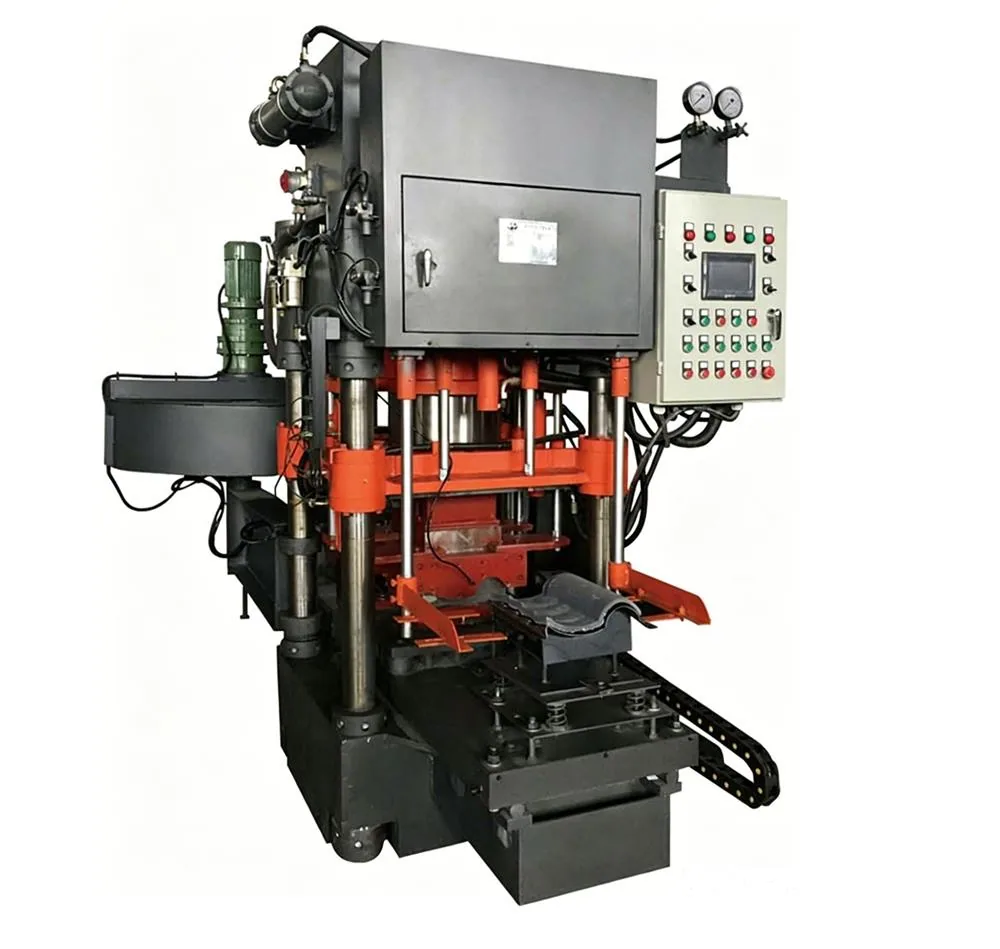
High-pressure filter pressing turns cement and sand into dense, weatherproof roof tiles.
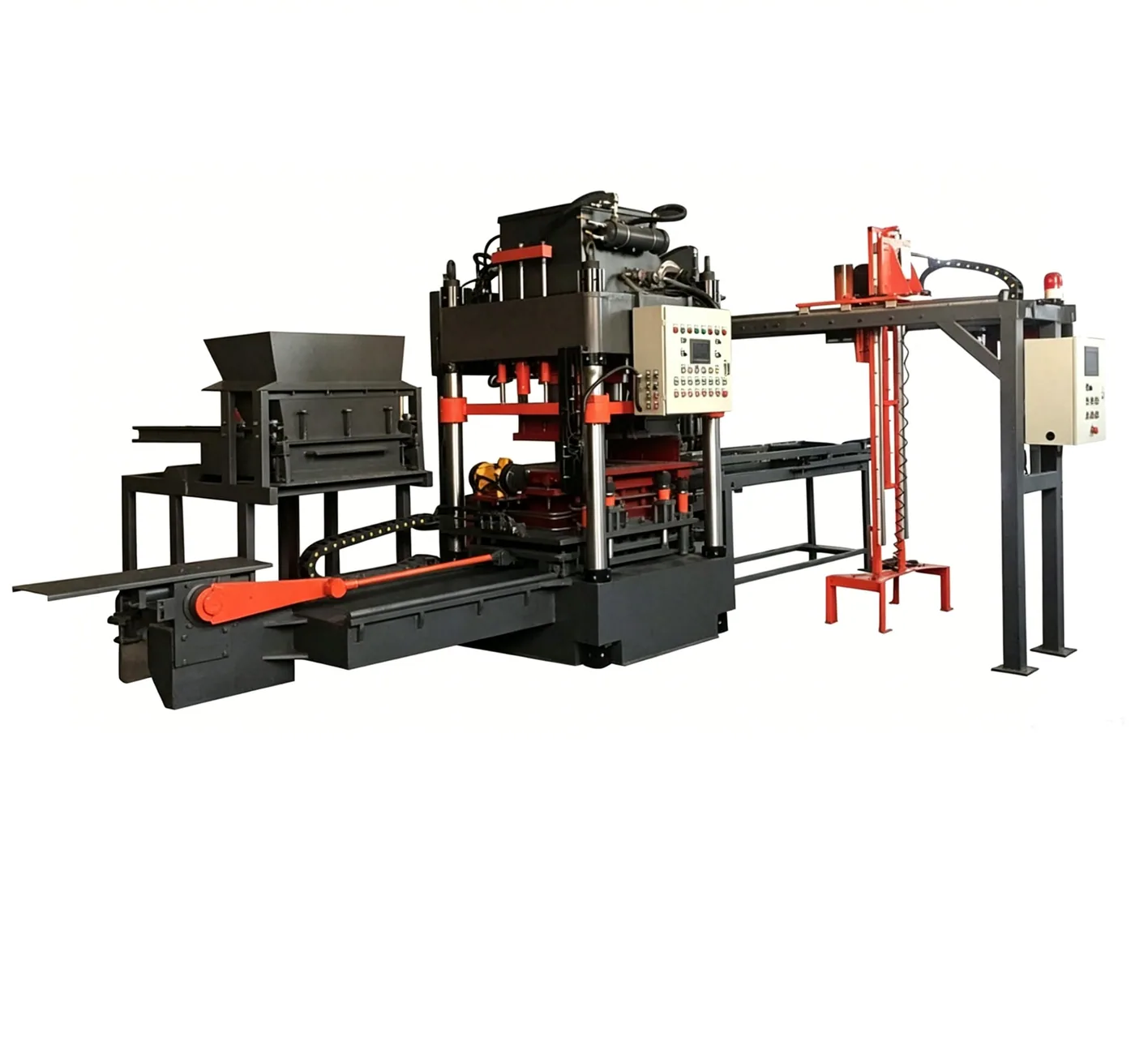
Wet mix filtration plus vacuum molding for curbs and pavers that replace quarry stone.