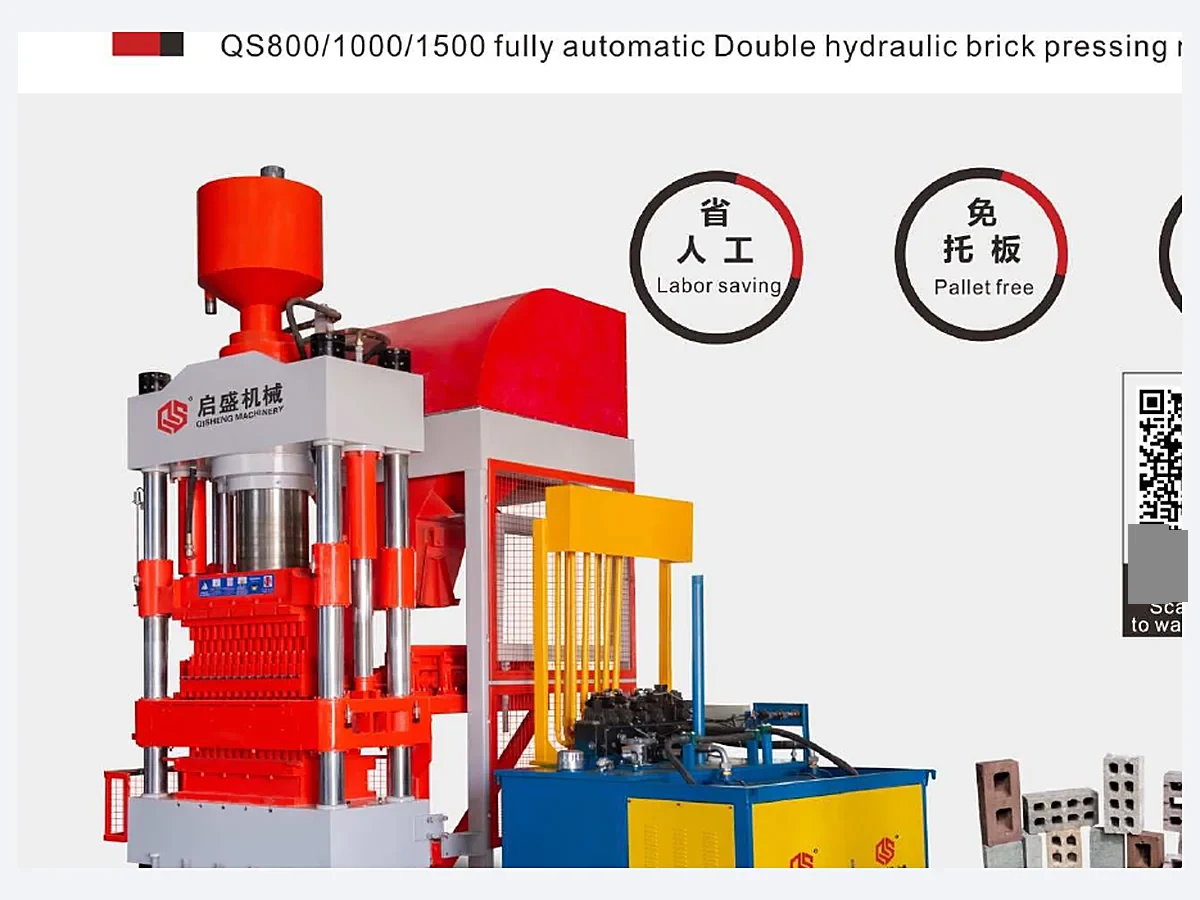
QS800 / QS1000 / QS1500
QS800 / QS1000 / QS1500 Fully Automatic Double-Direction Hydraulic Brick Pressing Machine
Pallet-free static pressing with compaction from both directions, dense, sharp-edged, high-strength products.
- 3 models
View details
Larger molding area and a 600 mm cylinder for high density brick output at low noise.
The QS1000 is a hydraulic brick-making machine sized for mid-sized and large building material plants. It forms bricks by pure hydraulic unidirectional static pressing, pushing steady high pressure into the mold in a single stroke instead of shaking the mix into place. Bricks leave the mold with high density, even strength, and clean faces, free from layering and cracks, and their flexural and compressive values sit above what vibration equipment manages. That profile fits high strength non-fired bricks, pavement bricks, and plaza bricks. The process runs without high frequency vibration, so noise drops and the workshop becomes a cleaner place to work. Full automatic control joins spreading, pressing, demolding, and discharge into one linked sequence, which cuts manual handling and labor cost. The frame is a heavy duty integrated steel structure given stress relief aging treatment, so it holds rigidity and load capacity through long pressure cycles. Molds can be swapped for colored floor tiles, plaza bricks, solid bricks, and curbstones. The machine also takes fly ash, slag, and construction debris as raw material, trimming material cost while reusing industrial waste.
Or call us: +86 158 8041 2886
<h2>Built for Mid-Sized and Large Plants</h2><p>The QS1000 is a hydraulic brick-making machine aimed at mid-sized and large building material enterprises that need higher volume per shift than entry level presses deliver. Its molding area and pressure head are sized so each cycle yields more pieces, while cycle time stays inside the range production planners expect from a static press line.</p><h2>The Static Pressing Process</h2><p>Forming is pure hydraulic and unidirectional. A stable high pressure stroke compacts the raw material in one pass, with no vibration stage. Bricks come out dense and uniform in strength, with neat edges, and without the layering or cracking that weaker forming methods leave behind. Flexural and compressive results sit above traditional vibration machines, so the output suits high strength non-fired bricks, pavement bricks, and plaza bricks.</p><h2>Quiet Operation and a Better Floor</h2><p>Since the machine uses no high frequency vibration, operating noise stays low and the workshop environment improves. Staff working near the press notice the difference over a full shift, and plants located near housing gain more room to run longer hours without complaint.</p><h2>Full Automatic Control</h2><p>Control links material spreading, pressing, demolding, and brick discharge into one sequence, with no manual step between them. Operators supervise rather than handle material, so labor cost per brick falls and timing stays consistent from the first mold of a shift to the last.</p><h2>Frame and Service Life</h2><p>The body is a heavy duty integrated steel structure that has gone through stress relief aging treatment. It resists deformation under sustained high pressure, keeps failure rates low, and makes routine maintenance simple. Long term running costs stay within reach because the structure holds its alignment instead of drifting over the years.</p><h2>Molds, Materials, and Duty</h2><p>Changing molds lets the QS1000 produce colored floor tiles, plaza bricks, solid bricks, and curbstones, so the same frame covers several product lines for municipal roads, community landscaping, and rural infrastructure. Raw material choice is wide: fly ash, slag, and construction debris all feed the press, lowering material cost and putting solid waste to work. Key figures include a maximum pressure of 31.5 MPa, a 600 mm main hydraulic cylinder bore, a molding cycle of 20 to 25 seconds, a molding area of 1,100 x 850 mm, and a tray of 1,200 x 900 x 20 mm. Total power is 66.4 kW and machine weight is about 29 tons. These figures also let a plant check whether existing mixers and conveyors can keep pace with the press.</p>
Tell us your target output and the raw materials you have, and we will send a detailed quotation.
| Parameter | QS1000 |
|---|---|
| Model | QS1000 |
| Maximum Pressure | 31.5 MPa |
| Main Hydraulic Cylinder Bore Diameter | 600 mm |
| Molding Cycle | 20 to 25 seconds |
| Molding Area | 1,100 x 850 mm |
| Tray Specification | 1,200 x 900 x 20 mm |
| Total Power | 66.4 kW |
| Overall Machine Weight | about 29 tons |
The pictures and parameters above are for reference only, and the final interpretation right belongs to our company. Final specifications are confirmed in the contract.
Send us your requirements for the QS1000 and we will come back with the machine list, a layout drawing and a price.
Enquiry about: QS1000, QS1000 Unidirectional Static Pressing Brick Machine
Pallet-free static pressing with compaction from both directions, dense, sharp-edged, high-strength products.
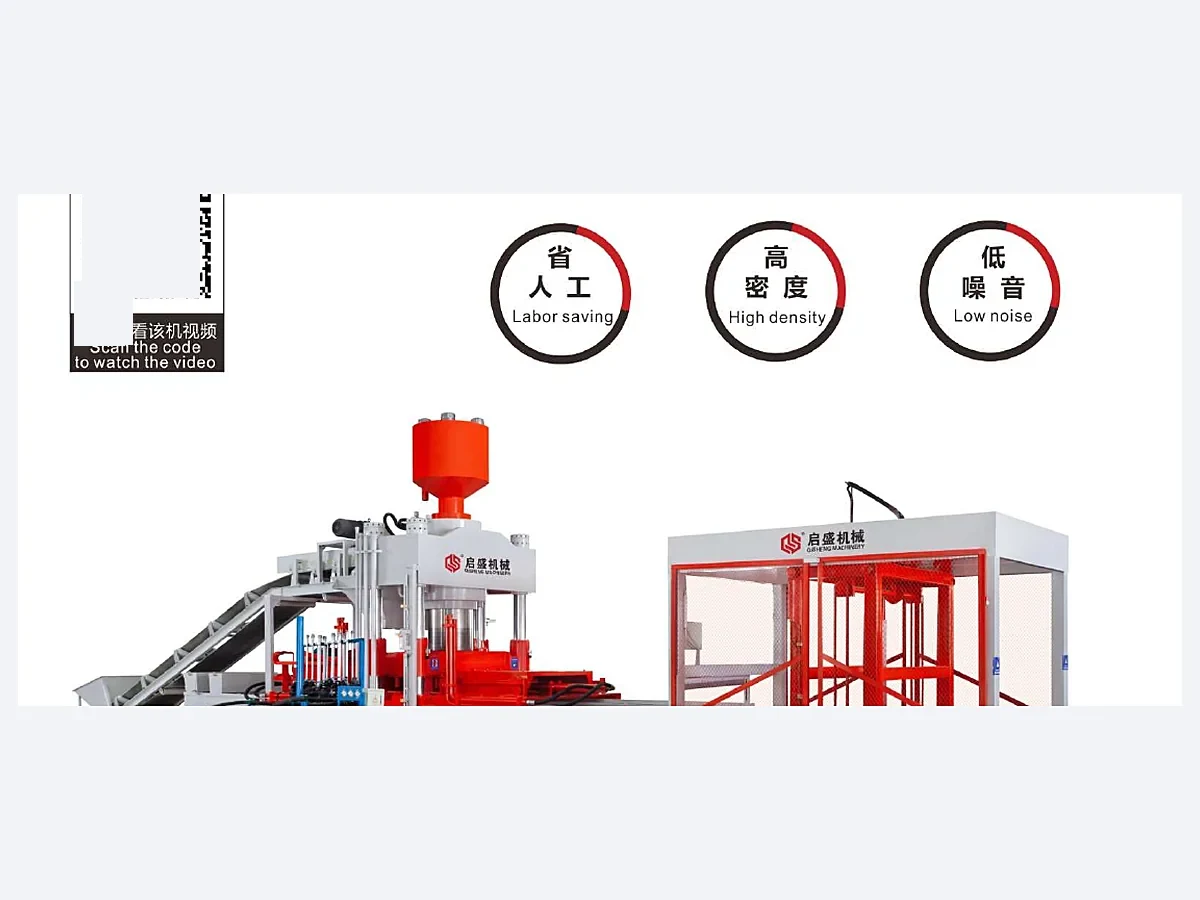
Low noise, low vibration, four sizes, the quiet workhorse for shaped concrete products.
Hydraulic static pressing forms dense non-fired bricks, pavers and curbstones at low noise.