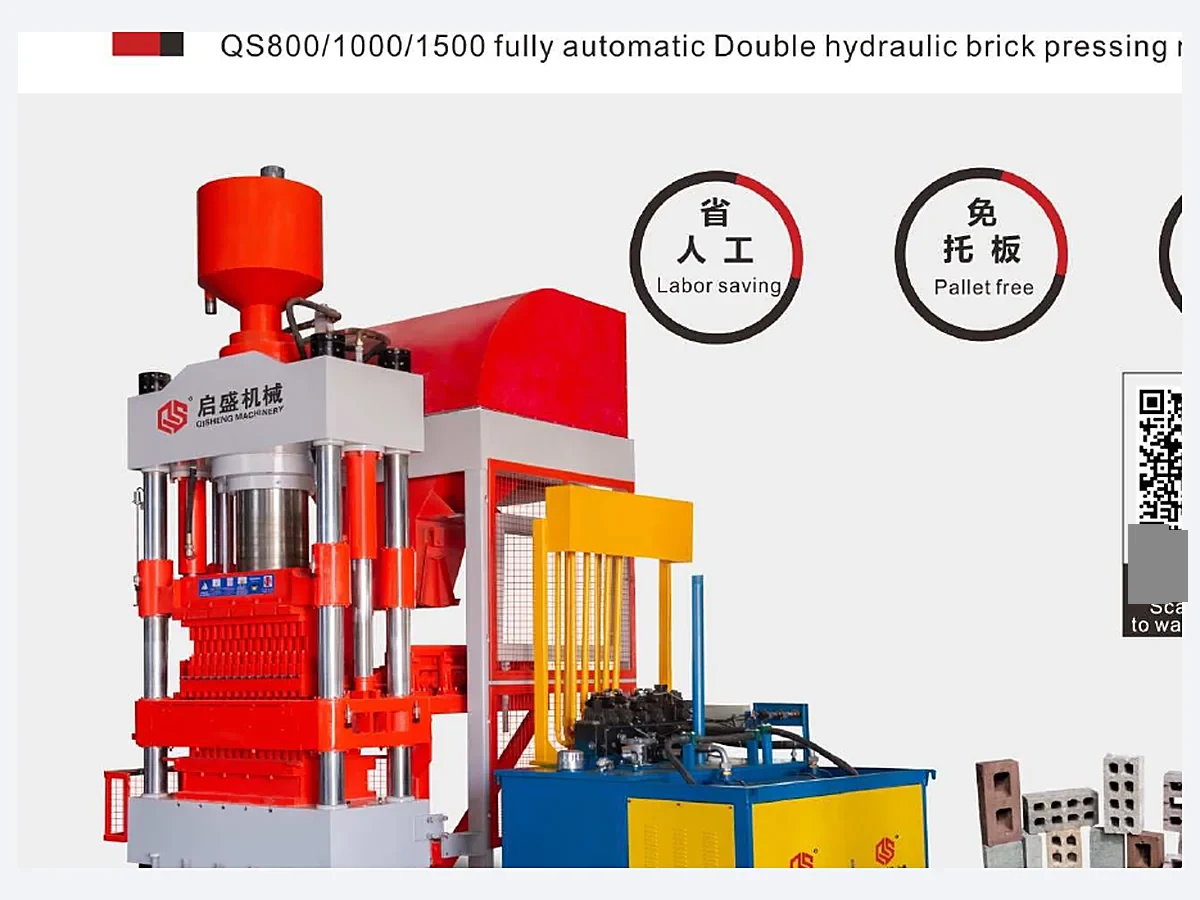
QS800 / QS1000 / QS1500
QS800 / QS1000 / QS1500 Fully Automatic Double-Direction Hydraulic Brick Pressing Machine
Pallet-free static pressing with compaction from both directions, dense, sharp-edged, high-strength products.
- 3 models
View details
Hydraulic static pressing for dense bricks, clean edges, low noise, and steady strength.
The QS800 is a hydraulic brick-making machine that forms bricks by unidirectional static pressing. Instead of vibration, it uses steady high pressure to compact the mix in one stroke, so the finished brick comes out dense, even in strength, and clean at the edges, without layering or cracks. Flexural and compressive values stay above what vibration machines usually deliver, which suits high strength non-fired bricks, paving bricks, and plaza tiles. Because the process uses no high frequency vibration, the machine runs quietly and the workshop stays cleaner and more comfortable. Control covers the whole sequence, linking feeding, pressing, demolding, and discharge, so manual work drops and labor cost falls. The frame is a heavy duty integrated steel structure that has gone through stress relief, giving it rigidity and load capacity that hold under long term high pressure work. Changing the mold switches output between colored floor tiles, plaza tiles, solid bricks, and curbstones. The machine also accepts fly ash, slag, and construction debris, so plants can cut raw material cost while using industrial waste.
Or call us: +86 158 8041 2886
<h2>How Unidirectional Static Pressing Works</h2><p>The QS800 is a hydraulic brick-making machine that relies on pure hydraulic unidirectional static pressing. Stable high pressure compacts and forms the raw material in one step, without a vibration stage. The result is a brick with high density, even strength, and neat faces, free from layering and cracks. Flexural and compressive values stay well above what traditional vibration equipment reaches, so the machine fits high strength non-fired bricks, paving bricks, and plaza tiles.</p><h2>Low Noise and a Cleaner Workshop</h2><p>Because forming is fully hydraulic and static, the machine produces no high frequency vibration. Operating noise drops, the building and the surrounding area feel less load, and the production floor stays cleaner. Plants that run near housing or inside a city zone often pick this route for that reason alone. Longer operating hours also become easier to manage with neighbours and local rules.</p><h2>Automation Across the Cycle</h2><p>Control covers the whole process and links feeding, pressing, demolding, and brick discharge into one smooth sequence. Manual intervention falls, so fewer operators are needed per shift and labor cost follows. The pattern also keeps cycle timing steady, which helps downstream handling and curing planning.</p><h2>Frame and Long Term Reliability</h2><p>The machine body is a heavy duty integrated steel structure that has undergone stress relief treatment. That gives the frame high rigidity and load capacity, and it holds shape under long hours of high pressure work. Failure rate stays low, maintenance is straightforward, and running costs remain predictable over the life of the machine.</p><h2>Molds, Materials, and Output</h2><p>By changing molds, the QS800 produces colored floor tiles, plaza tiles, solid bricks, and curbstones. It also handles a broad range of raw materials, including fly ash, slag, and construction debris, which lowers material cost and puts industrial waste to use. Main parameters are a maximum pressure of 31.5 MPa, a 500 mm main hydraulic cylinder bore, a molding cycle of 20 to 25 seconds, a molding area of 1,100 x 680 mm, and a tray of 1,100 x 700 x 20 mm. Total power is 54.9 kW and machine weight is about 24 tons. Site teams can plan the layout around the molding area and tray size, so the press, the conveyor, and the curing yard line up without wasted floor space. The tray of 1,100 x 700 x 20 mm and the molding area of 1,100 x 680 mm define the working footprint. Typical duty covers municipal roads, community landscapes, and rural infrastructure.</p>
Tell us your target output and the raw materials you have, and we will send a detailed quotation.
| Parameter | QS800 |
|---|---|
| Model | QS800 |
| Maximum Pressure | 31.5 MPa |
| Main Hydraulic Cylinder Bore Diameter | 500 mm |
| Molding Cycle | 20 to 25 seconds |
| Molding Area | 1,100 x 680 mm |
| Tray Specification | 1,100 x 700 x 20 mm |
| Total Power | 54.9 kW |
| Overall Machine Weight | about 24 tons |
The pictures and parameters above are for reference only, and the final interpretation right belongs to our company. Final specifications are confirmed in the contract.
Send us your requirements for the QS800 and we will come back with the machine list, a layout drawing and a price.
Enquiry about: QS800, QS800 Unidirectional Static Pressing Brick Machine
Pallet-free static pressing with compaction from both directions, dense, sharp-edged, high-strength products.
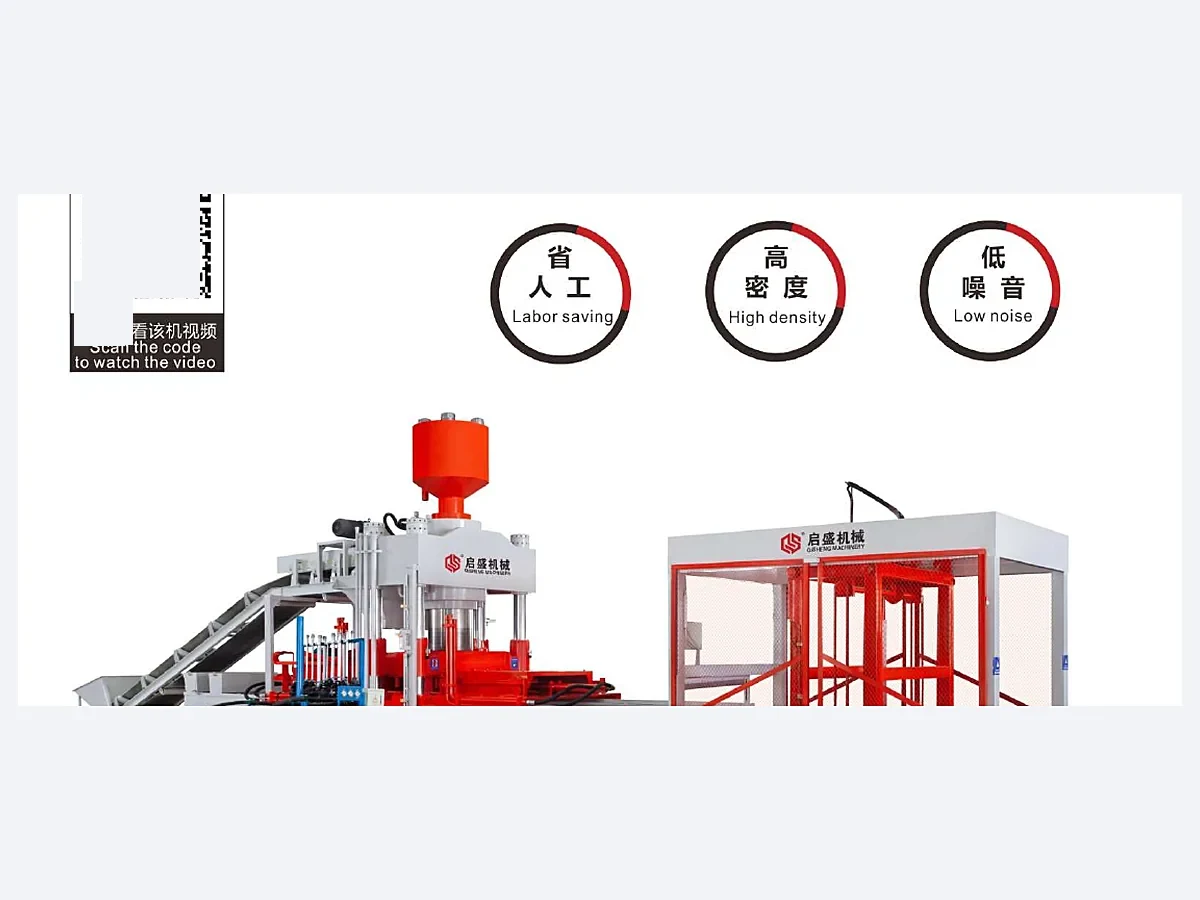
Low noise, low vibration, four sizes, the quiet workhorse for shaped concrete products.
Hydraulic static pressing forms dense non-fired bricks, pavers and curbstones at low noise.