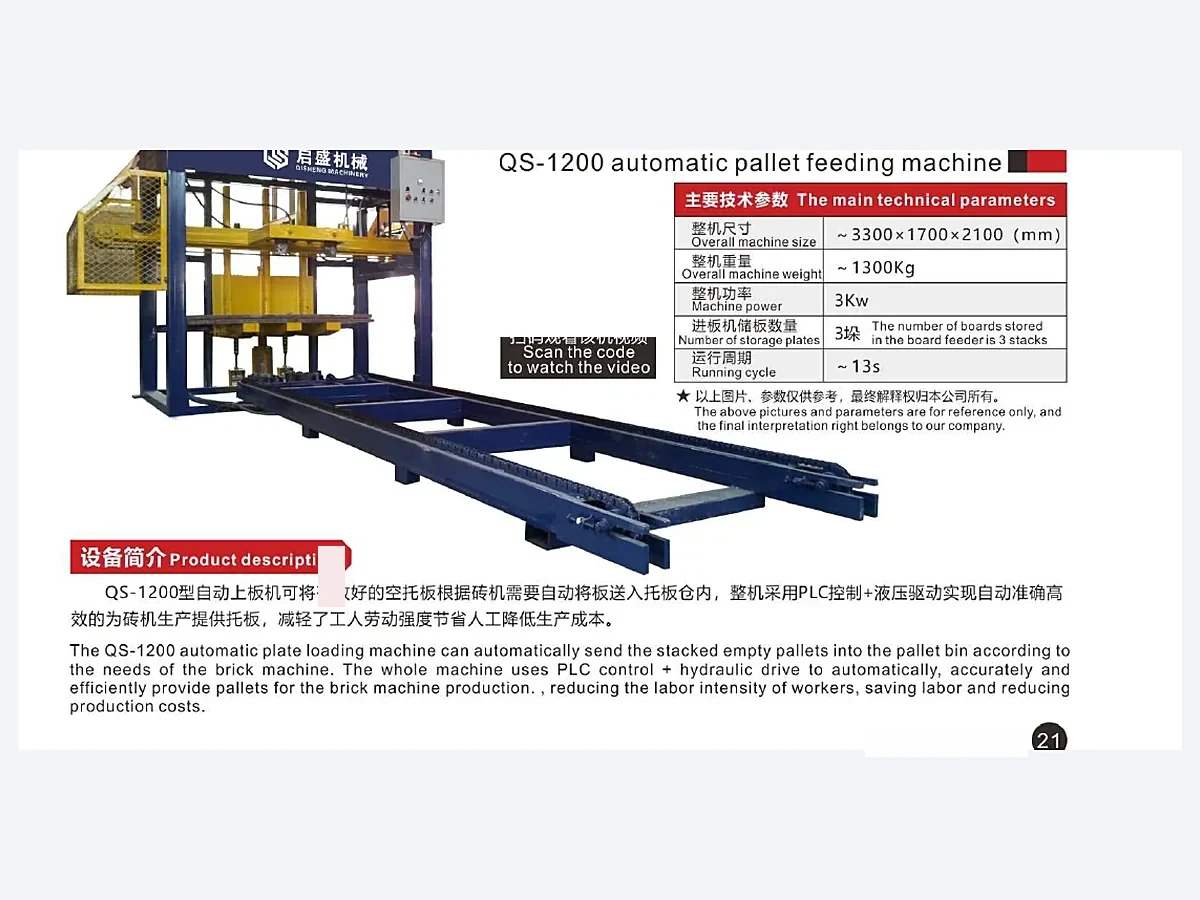
QS-1200
QS-1200 Automatic Pallet Feeding Machine
Keeps the block machine fed with pallets automatically, PLC plus hydraulic drive, one operator less.
View details
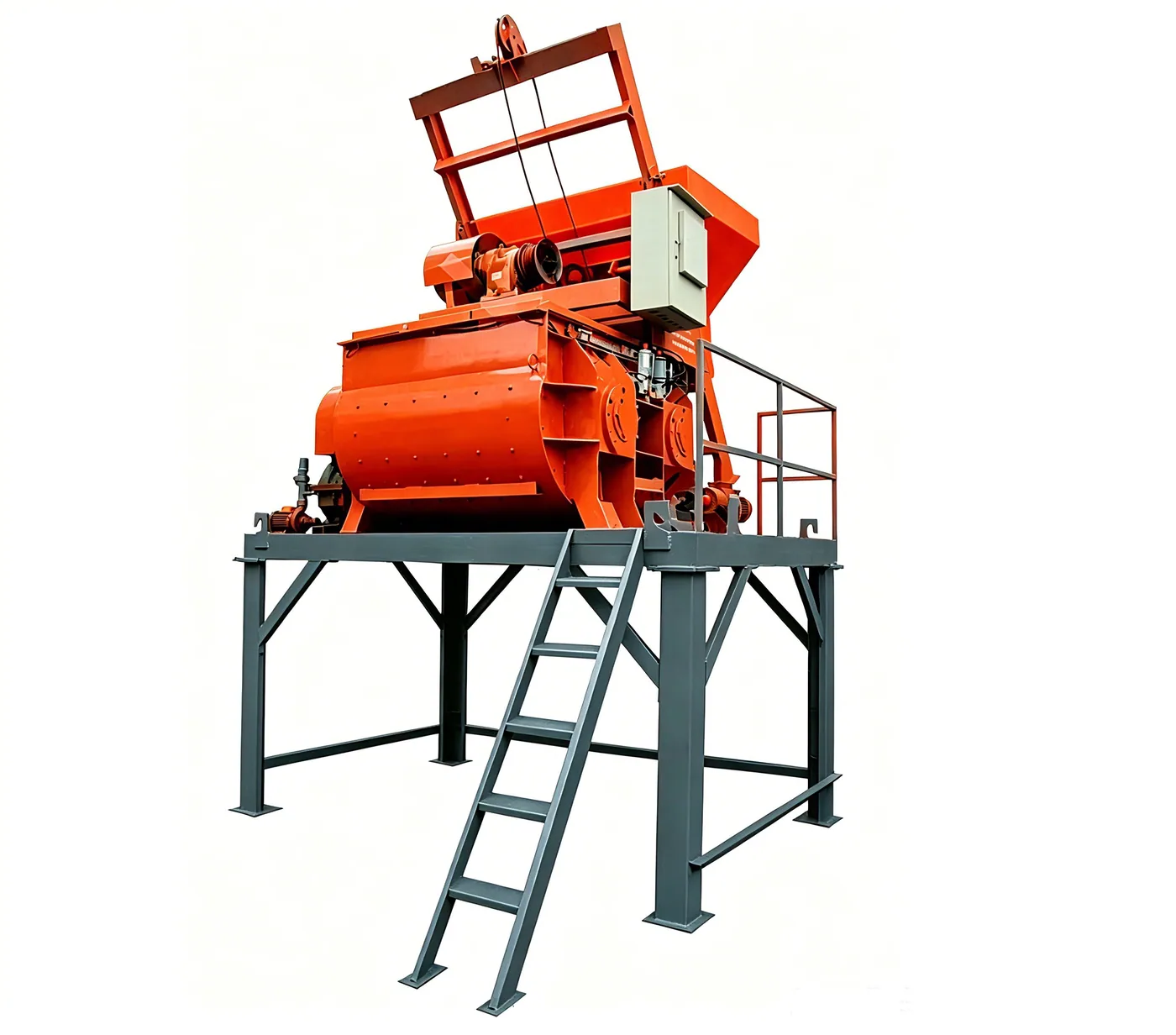
Forced twin-shaft mixing for batching plants, precast yards and block factories.
The QS-1200 is a twin-shaft concrete mixer built for batching plants, precast yards and concrete brick factories. A new spiral blade arrangement on two counter-rotating shafts cuts mixing time and produces a uniform blend, so aggregate, cement, water and admixture reach the same consistency in every batch. The machine handles dry-hard and plastic concrete, lightweight aggregate mixes and various mortars, so one mixer covers several product lines instead of one. It can be paired with PL series batchers to form a simple batching plant, or installed as an independent mixing host. The series is offered in JS500, JS750, JS1000 and JS1500 sizes with discharge capacities of 500, 750, 1,000 and 1,500 litres and production rates from 25 up to 75 cubic metres per hour. Maximum aggregate size is 80 mm for pebbles and 60 mm for crushed stone across the range. Total power runs from 25.5 kW to 75 kW, and machine weight from 4,000 kg to 9,080 kg. Blade speed and hopper lifting speed vary with size, and discharge height runs from 1,500 mm to 3,800 mm to suit truck loading or skip transfer.
Or call us: +86 158 8041 2886
<h2>Spiral Blade Layout and Mixing Uniformity</h2><p>The QS-1200 uses a new spiral arrangement of blades on two counter-rotating shafts. Rather than stirring the charge around the drum, the blades lift it and fold it back through the centre, so aggregate, cement, water and admixture meet in a fast three-dimensional flow. Mixing time shortens and the blend comes out even, which is what keeps strength stable between batches.</p><p>Uniform mixing is also what prevents segregation. A mix that separates on the way to the skip will show up as weak spots in a cast element, and no amount of cement will fix a batch that was never properly blended.</p><h2>One Mixer, Several Product Lines</h2><p>The machine handles dry-hard and plastic concrete, lightweight aggregate concrete and various mortar mixes. That range means a plant making blocks, precast elements and site concrete can run all three from one host instead of buying separate mixers for each product family.</p><p>Two installation routes are available. Paired with PL series batchers, the mixer forms a simple batching plant with weighing, feeding and mixing in one arrangement. Used alone, it works as an independent host where a plant already has its own batcher and feeding system.</p><h2>Sizes, Capacities and Power</h2><p>The series runs from JS500 to JS1500. Feed capacity is 800, 1,200, 1,600 and 2,400 litres, discharge capacity 500, 750, 1,000 and 1,500 litres, and production rate 25, 35, 50 and 75 cubic metres per hour or above.</p><p>Total power moves from 25.5 kW on the JS500 to 75 kW on the JS1500, and machine weight from 4,000 kg to 9,080 kg. Blade speed with blade count differs across sizes, and hopper lifting speed sits at 18 or 19.2 metres per minute. Discharge height ranges from 1,500 mm on the smaller builds to 3,800 mm on the larger ones, which decides whether a truck can be loaded directly.</p><h2>Aggregate Size and Daily Care</h2><p>Maximum aggregate size is 80 mm for pebbles and 60 mm for crushed stone across the whole range, so a plant handling both materials does not need a different mixer for each. Where oversize stone sometimes arrives, a grid over the skip is cheaper than a repair to the blade set.</p><p>Daily work is straightforward: check blade clearance, inspect the shaft seals for slurry weeping, grease the bearing housings and confirm the hopper wire rope. Blade clearance is the setting that decides how long a set lasts, because a worn gap leaves unmixed material against the drum wall.</p>
Tell us your target output and the raw materials you have, and we will send a detailed quotation.
| Parameter | QS-1200 |
|---|---|
| Model | QS-1200 |
| Series sizes | JS500 / JS750 / JS1000 / JS1500 |
| Feed capacity (L) | 800 / 1,200 / 1,600 / 2,400 |
| Discharge capacity (L) | 500 / 750 / 1,000 / 1,500 |
| Production rate (m3/h) | 25 / 35 / 50 / 75 and above |
| Max aggregate size (mm) | 80 for pebbles / 60 for crushed stone |
| Blade speed x quantity (r/min) | 30.5x2x7 / 35x2x7 / 25.5x2x8 / 26x2x8 |
| Total power (kW) | 25.5 / 39.35 / 50.2 / 75 |
| Hopper lifting speed (m/min) | 18 / 19.2 / 18 / 18 |
| Machine weight (kg) | 4,000 / 6,800 / 8,750 / 9,080 |
| Discharge height (mm) | 1,500 / 1,600 / 3,800 / 3,800 |
| Installation | With PL series batchers or as an independent host |
The pictures and parameters above are for reference only, and the final interpretation right belongs to our company. Final specifications are confirmed in the contract.
Send us your requirements for the QS-1200 and we will come back with the machine list, a layout drawing and a price.
Enquiry about: QS-1200, QS-1200 Twin-Shaft Concrete Mixer (JS500 to JS1500)
Keeps the block machine fed with pallets automatically, PLC plus hydraulic drive, one operator less.
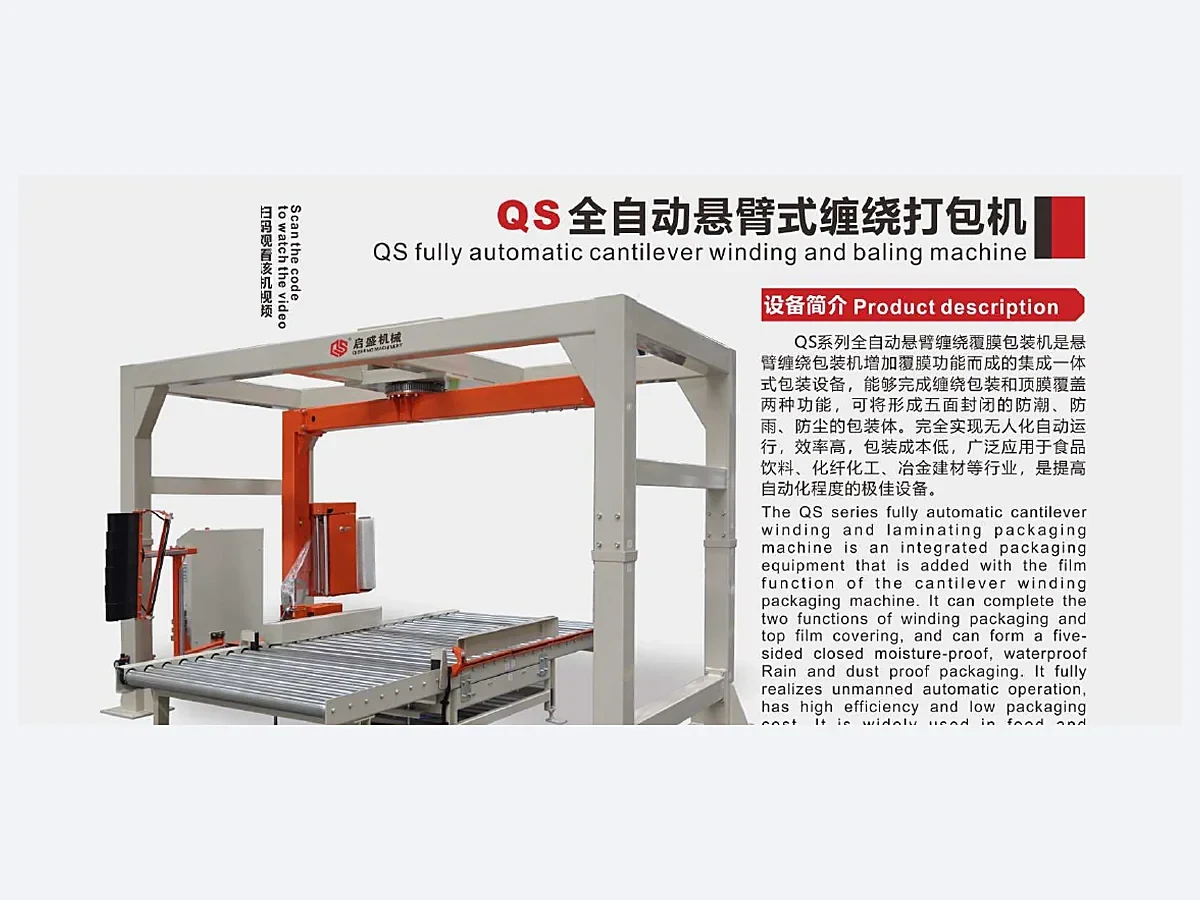
Five-sided sealed packaging, moisture-proof, rain-proof and dust-proof, with no operator needed.
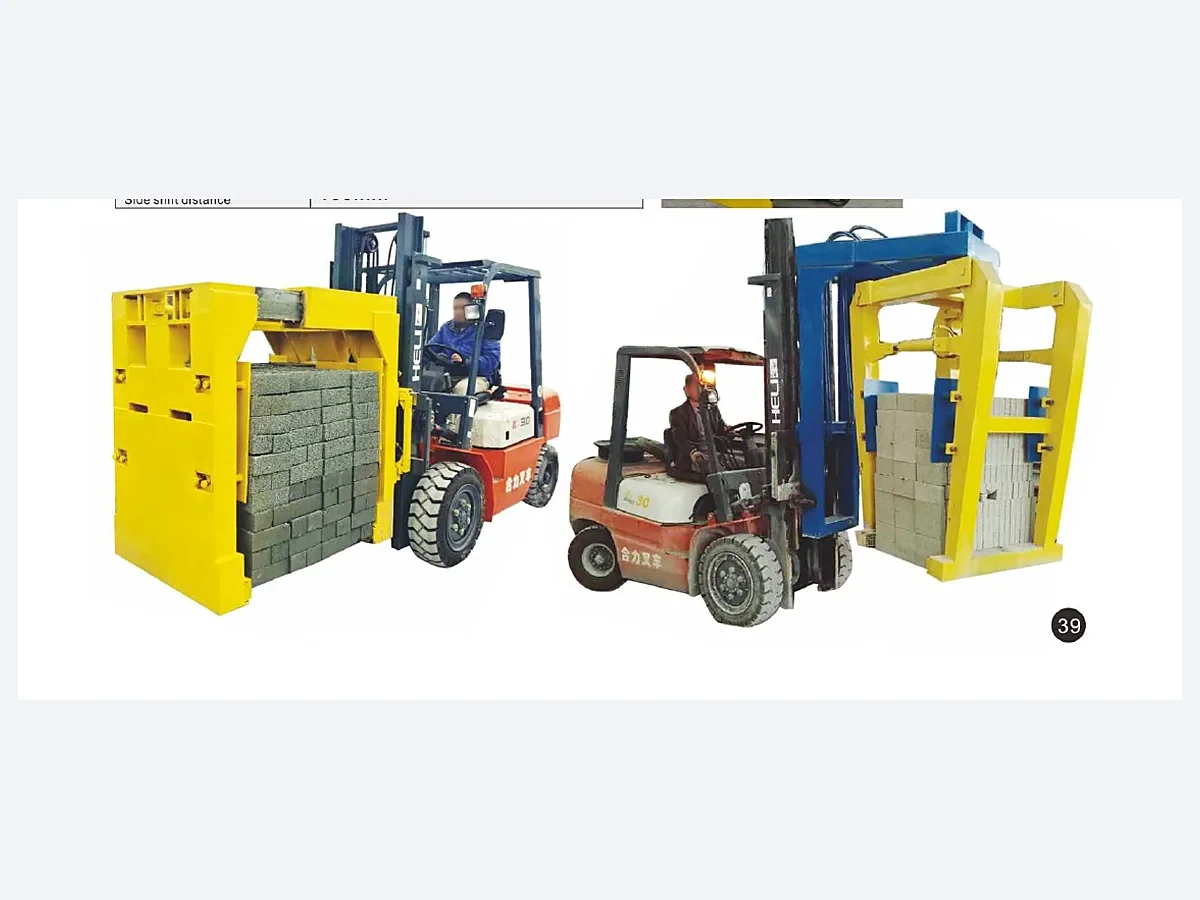
Lift 500–800 standard bricks or 40 hollow blocks in one bite, and load the truck without pallets.