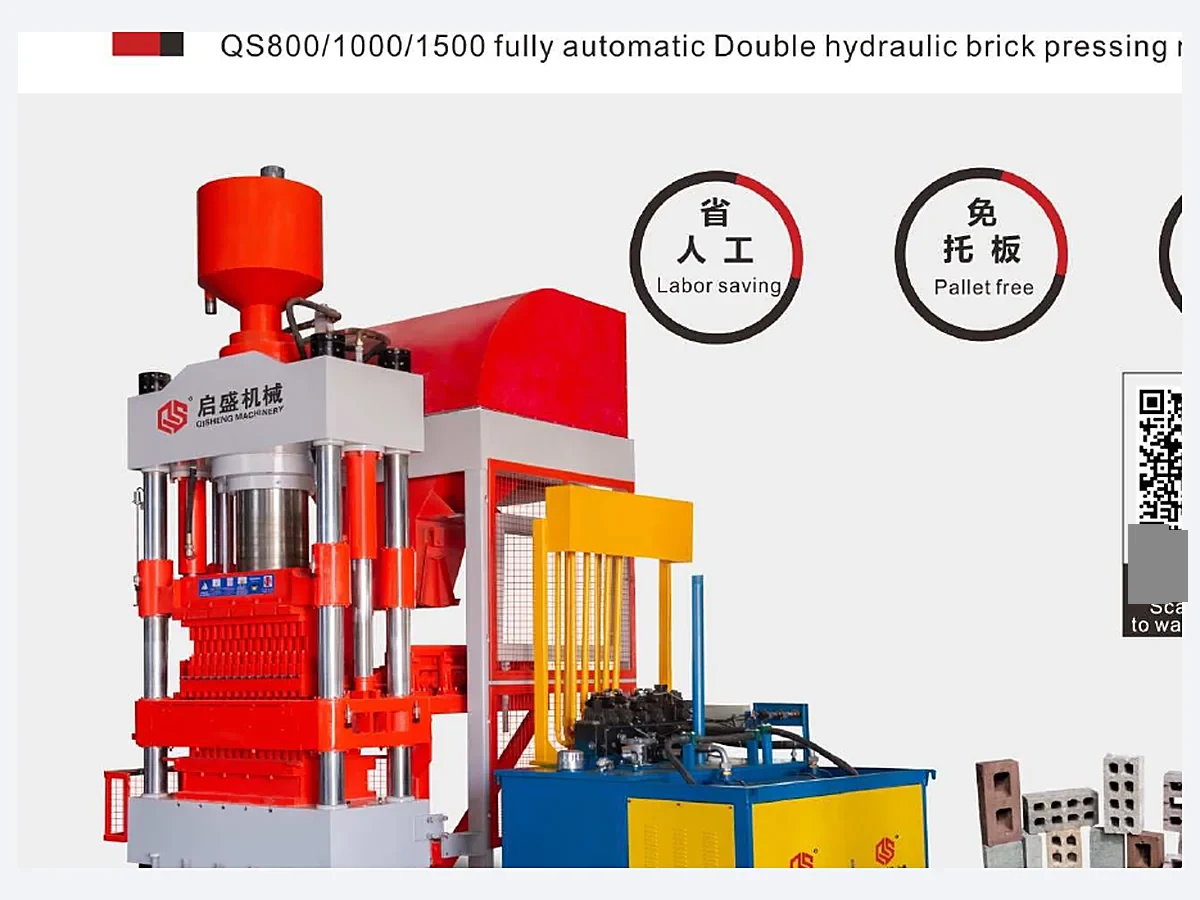
QS800 / QS1000 / QS1500
QS800 / QS1000 / QS1500 Fully Automatic Double-Direction Hydraulic Brick Pressing Machine
Pallet-free static pressing with compaction from both directions, dense, sharp-edged, high-strength products.
- 3 models
View details
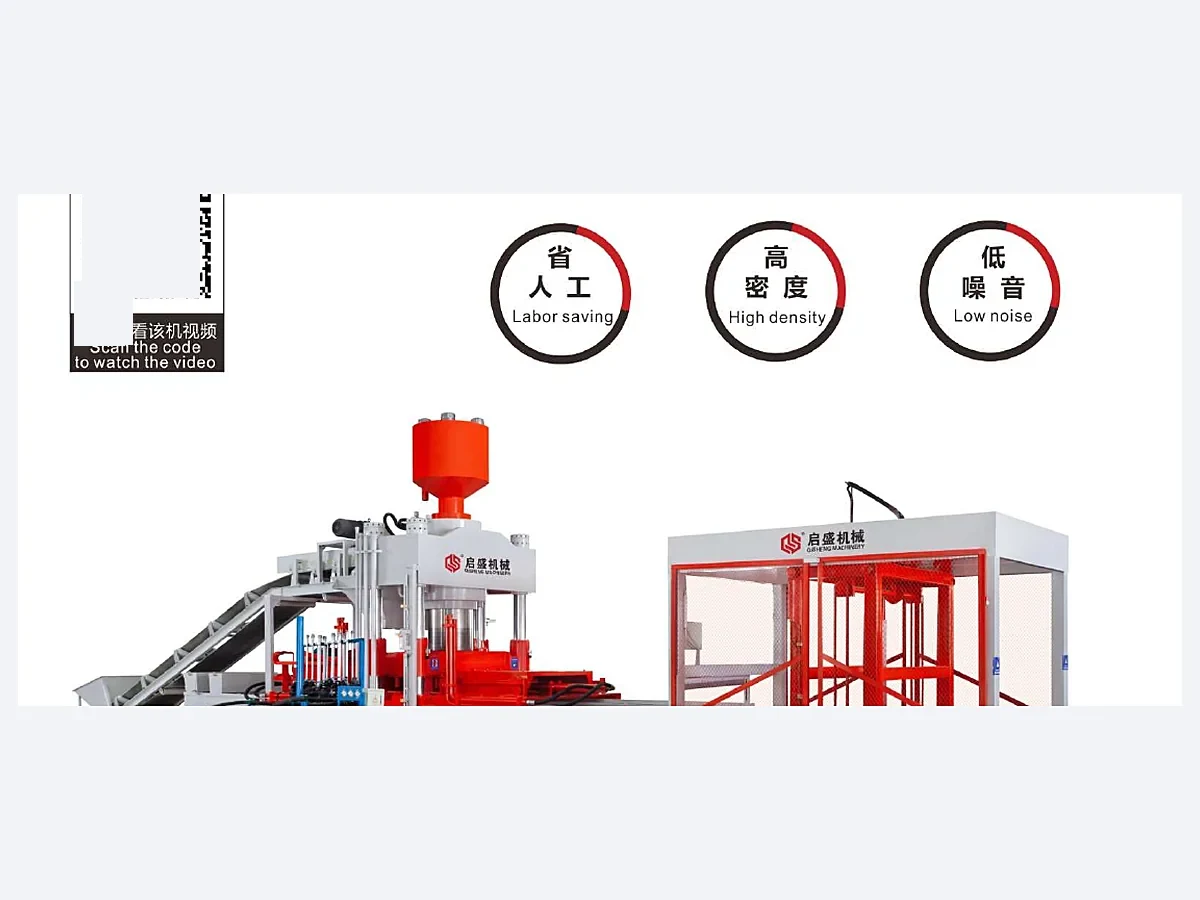
Twin-direction hydraulic static pressing for dense, uniform, high-strength bricks.
Built for medium and large block plants, the QS1000 presses bricks from two directions at once. An upper and a lower hydraulic cylinder move in sync, so the mix inside the mold is compacted from top and bottom with matched pressure. The result is a blank with even density from face to core, which removes the delamination, bulging and edge cracking that single-direction presses often leave behind. Compressive and flexural values sit above what traditional unidirectional machines deliver, so the line suits high-strength standard bricks, hollow blocks and solid blocks. Three goals shaped the design: less manual work, no pallet handling and a high degree of automation. Because forming is static rather than vibratory, a QS1000 runs quietly and keeps the workshop clean. A PLC system links material distribution, pressing, demolding and brick take-off into one cycle, so operators are not needed at every station. The frame is a single heavy steel weld, stress-relief aged before machining, which holds rigidity under years of high pressure. Changing the mold set switches the machine between brick types, and fly ash, slag and construction debris can all go into the mix.
Or call us: +86 158 8041 2886
<h2>How Two-Direction Pressing Works</h2><p>The QS1000 carries an upper cylinder and a lower cylinder that travel together through one forming cycle. Both act on the same mold, so the concrete is squeezed from the top and the bottom at once instead of being pushed down against a fixed base. Pressure reaches 31.5 MPa and stays even across the whole mold face. This is what separates the machine from an ordinary press: the density gradient that builds up in one-way compaction does not form here, and the finished block keeps the same strength at its center as at its skin.</p><h2>Frame and Hydraulic Construction</h2><p>The body is a single welded steel structure rather than a bolted assembly. After welding it is given stress-relief aging treatment, which lets internal stresses settle before the machining of the guide surfaces. The frame therefore holds its geometry under continuous high load and does not creep out of alignment after a few years of shifts. The main cylinder has a bore of 600 mm. Machine weight is about 33 tons and total installed power is 105.4 kW. Large-diameter guide columns keep the moving platen parallel through the stroke, which protects the mold and extends its service life.</p><h2>PLC Control and the Automatic Cycle</h2><p>A PLC with a touch-screen terminal governs the sequence: material distribution, upper and lower pressing, demolding and brick discharge. Once the recipe is stored, the operator starts a cycle and the controller repeats it. There is no pallet to feed by hand, which removes the hardest manual job on a traditional line and cuts the number of people needed per shift. Alarm screens report a fault and stop the cycle before the mold or the frame is damaged.</p><h2>Products, Molds and Raw Materials</h2><p>The forming area is 1100 by 850 mm and the standard pallet measures 1200 by 950 by 20 mm, with a forming cycle of 18 to 22 seconds. Mold sets can be exchanged to produce standard bricks, hollow blocks and solid blocks of several sizes. Because the process does not depend on a narrow aggregate grade, the mix can take fly ash, slag and crushed construction debris alongside sand, cement and stone chips. That keeps raw material purchasing flexible and lowers cost per piece.</p><h2>Where the Machine Fits</h2><p>Typical installations are municipal engineering works, civil building projects and rural infrastructure programs that need a steady supply of structural units. The series is offered in QS600, QS800, QS1000, QS1500, QST1200 and QST1800 sizes, so a plant can start on a smaller frame and move up as its order book grows. Low noise, no pallet logistics and a small operating crew are the reasons most buyers in the Middle East, Africa and South East Asia choose a static press over a vibrating table.</p>
Tell us your target output and the raw materials you have, and we will send a detailed quotation.
| Parameter | QS1000 |
|---|---|
| Model | QS1000 |
| Maximum Pressure | 31.5 MPa |
| Machine Weight | ~33 t |
| Total Power | 105.4 kW |
| Main Cylinder Bore | 600 mm |
| Forming Cycle | 18 to 22 s |
| Forming Area | 1100 x 850 mm |
| Pallet Size | 1200 x 950 x 20 mm |
The pictures and parameters above are for reference only, and the final interpretation right belongs to our company. Final specifications are confirmed in the contract.
Send us your requirements for the QS1000 and we will come back with the machine list, a layout drawing and a price.
Enquiry about: QS1000, QS1000 Bidirectional Static Pressing Brick Machine
Pallet-free static pressing with compaction from both directions, dense, sharp-edged, high-strength products.
Low noise, low vibration, four sizes, the quiet workhorse for shaped concrete products.
Hydraulic static pressing forms dense non-fired bricks, pavers and curbstones at low noise.