QT5-15, QT5-15 Automatic Concrete Block Molding Machine
QT5-15

QT5-15 Automatic Concrete Block Molding Machine

Hydraulic pressure plus high frequency vibration forming blocks in 15 to 20 seconds.

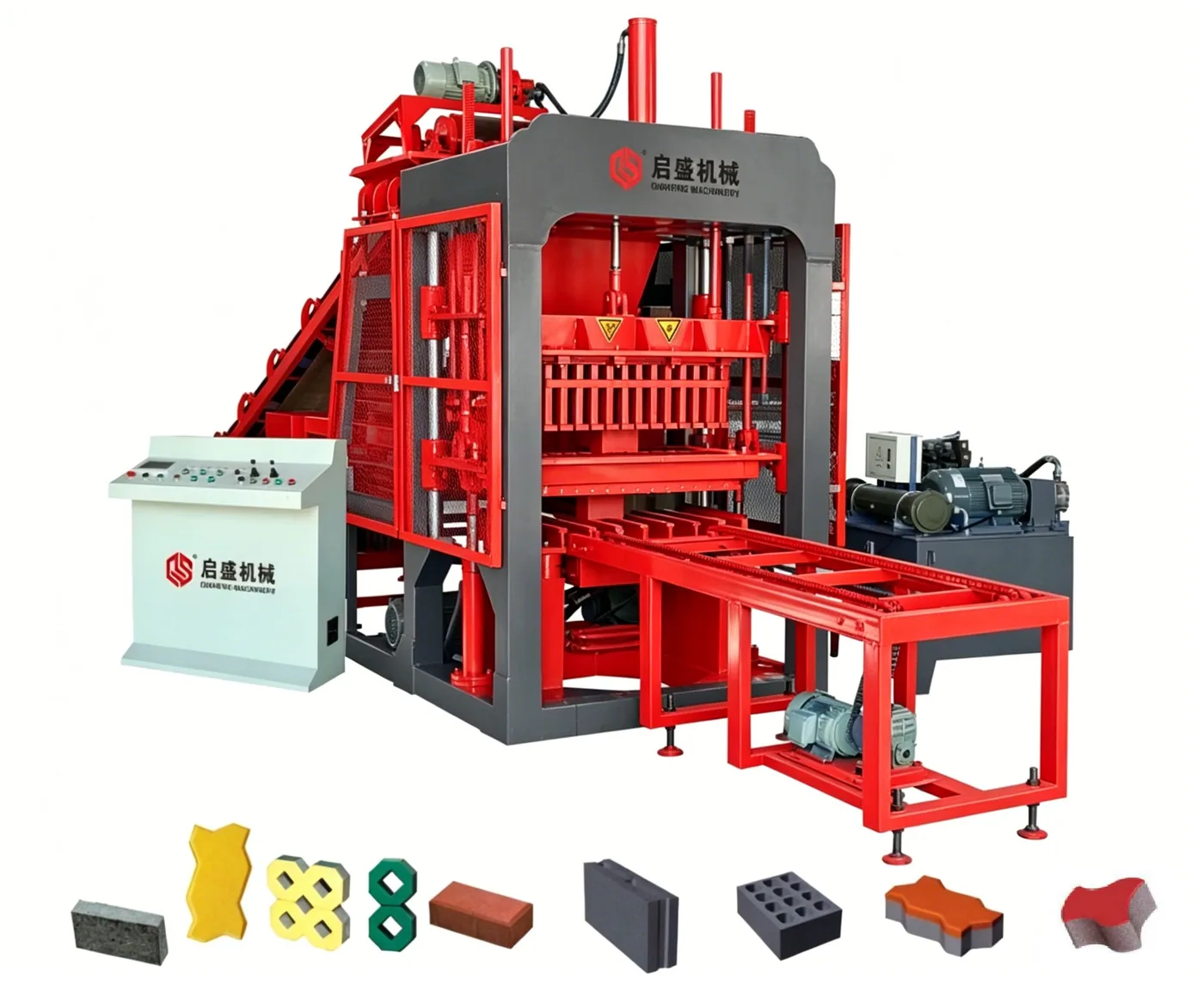
The QT5-15 is a fully automatic block molding machine for medium and large building materials plants. It forms blocks by combining high frequency vibration with hydraulic pressure, so material packs quickly and evenly into the mould and the finished unit leaves with dense structure, even corners and tight dimensional tolerance. A forming cycle of 15 to 20 seconds sets the working rhythm, and a 58 kN excitation force with 25 MPa forming pressure does the compaction. Total installed power is 37.4 kW, with a separate 2.25 kW feeding motor. A PLC and industrial touch screen run the whole sequence, from feeding and forced distribution through vibration and pressing to demoulding, brick removal and pallet return. One touch sets parameters, the screen shows live status, and faults are reported with a diagnosis rather than a bare code. The host frame is welded as one piece and stress relieved by aging, which is what allows it to hold accuracy under continuous high frequency vibration. Batching machines, mixers, belt conveyors and automatic stackers connect directly to build a complete line. Moulds can be changed between block types inside a shift, so one machine serves hollow blocks, pavers and solid units.

Category
Fully Automatic Block Making Machines
Customization
Designed to your site and target output
Warranty
12 months on main components

Or call us: +86 158 8041 2886

Product Description

<h2>Composite Forming in a 15 to 20 Second Cycle</h2><p>The QT5-15 molds blocks by combining high frequency vibration with hydraulic pressure. Vibration fluidises the mix so it flows into every corner of the mould, then the hydraulic unit applies a forming pressure of 25 MPa to lock the structure before demoulding. The two actions run as one stroke rather than as separate stages, and a forming cycle of 15 to 20 seconds sets the production rhythm of the line.</p><p>Blocks leave with even edges, stable strength and dimensional tolerance held tighter than the usual site requirement. Pallet size is fixed at 1,100 x 650 x 20 mm, so pallet handling equipment can be specified once and kept for the life of the line.</p><h2>Drive, Power and Frame Construction</h2><p>Total installed power is 37.4 kW, of which a dedicated 2.25 kW motor drives the feeding and distribution box. An excitation force of 58 kN is delivered into the mould, which is high enough to handle stiff, low slump mixes that older vibration-only machines struggle with.</p><p>The host is built around a heavy integral welded frame, stress relieved by aging treatment before machining. That matters more than it sounds: continuous high frequency vibration and pressing will distort a frame that was only bolted together, and once the frame moves, block height tolerance moves with it. Host weight is 6,900 kg and the host envelope is 9,450 x 3,300 x 2,700 mm.</p><h2>PLC Sequence and Operator Control</h2><p>A PLC programmable controller and an industrial touch screen handle the full sequence: raw material feeding, forced material distribution, vibration and pressing, demoulding and brick removal, then pallet recycling. Each step is coordinated with the next, so the machine keeps a steady cycle without an operator standing at the mould.</p><p>Parameters are entered once and stored as recipes. The screen shows live machine status, and the diagnostic function names the step that failed instead of showing only a fault number. For a plant running several block types per shift, that shortens the changeover between moulds.</p><h2>Building a Complete Block Line</h2><p>The QT5-15 connects directly with batching machines, mixers, belt conveyors and automatic stacking machines. A line assembled from these modules moves material without manual handling between stations, which cuts both labour cost and the physical workload on the crew.</p><p>Typical buyers are municipal building materials producers and solid waste resource recovery plants making non-fired units. Before sizing the line, agree on the pallet count and the curing area, because stacking capacity rather than moulding speed is usually what limits daily output.</p>
Key Features

  • High frequency vibration combined with 25 MPa hydraulic pressure forms dense blocks in one stroke.
  • Forming cycle of 15 to 20 seconds with 58 kN excitation force from the vibration system.
  • Total installed power of 37.4 kW, including a dedicated 2.25 kW feeding motor.
  • Heavy integral welded frame, stress relieved by aging, resists long term vibration without distortion.
  • PLC with industrial touch screen runs feeding, distribution, pressing, demoulding and pallet return.
  • Pallet size of 1,100 x 650 x 20 mm and host weight of 6,900 kg for stable pressing.

Send us your requirements

Tell us your target output and the raw materials you have, and we will send a detailed quotation.

Technical Parameters

Parameter QT5-15
Model QT5-15
Forming cycle 15 to 20 seconds
Total power 37.4 kW
Excitation force 58 kN
Forming pressure 25 MPa
Feeding motor power 2.25 kW
Host weight 6,900 kg
Host dimensions 9,450 x 3,300 x 2,700 mm
Pallet size 1,100 x 650 x 20 mm

The pictures and parameters above are for reference only, and the final interpretation right belongs to our company. Final specifications are confirmed in the contract.

Inquire about this machine

Send us your requirements for the QT5-15 and we will come back with the machine list, a layout drawing and a price.

  • The products you want to make and their sizes
  • The output you need per shift
  • The raw materials available to you
  • Site area and available power supply

Enquiry about: QT5-15, QT5-15 Automatic Concrete Block Molding Machine

We reply within 12 hours. Your information is never shared.

Frequently Asked Questions

What does a 15 to 20 second forming cycle mean in daily output?
The cycle covers feeding, distribution, vibration and pressing, demoulding and brick removal. Daily output follows from the number of blocks per pallet, the pallet count in circulation and the curing area available, not from the machine alone. Plants that add pallets and stacking capacity usually raise output more cheaply than plants that push the cycle faster and risk weaker units.
How does the machine handle stiff, low slump mixes?
It combines two actions rather than relying on vibration alone. Vibration fluidises the mix so it reaches every corner of the mould, then the hydraulic unit presses at 25 MPa to densify the structure. With 58 kN of excitation force the system copes with mix designs that would simply pack up in a vibration-only machine.
Why does the frame design affect block quality?
The host frame is welded as one piece and stress relieved by aging before machining. Continuous vibration and pressing distort a frame that is only bolted together, and once it moves, block height tolerance and edge quality move with it. The aging treatment is what keeps the 6,900 kg host holding its geometry after years of running.
Can this machine be added to an existing block line?
Yes. The QT5-15 connects directly with batching machines, mixers, belt conveyors and automatic stacking machines. When replacing an older unit, check the pallet size first, because the machine uses 1,100 x 650 x 20 mm pallets, and confirm the conveyor height and the space around the 9,450 x 3,300 x 2,700 mm host before delivery.

Related Products

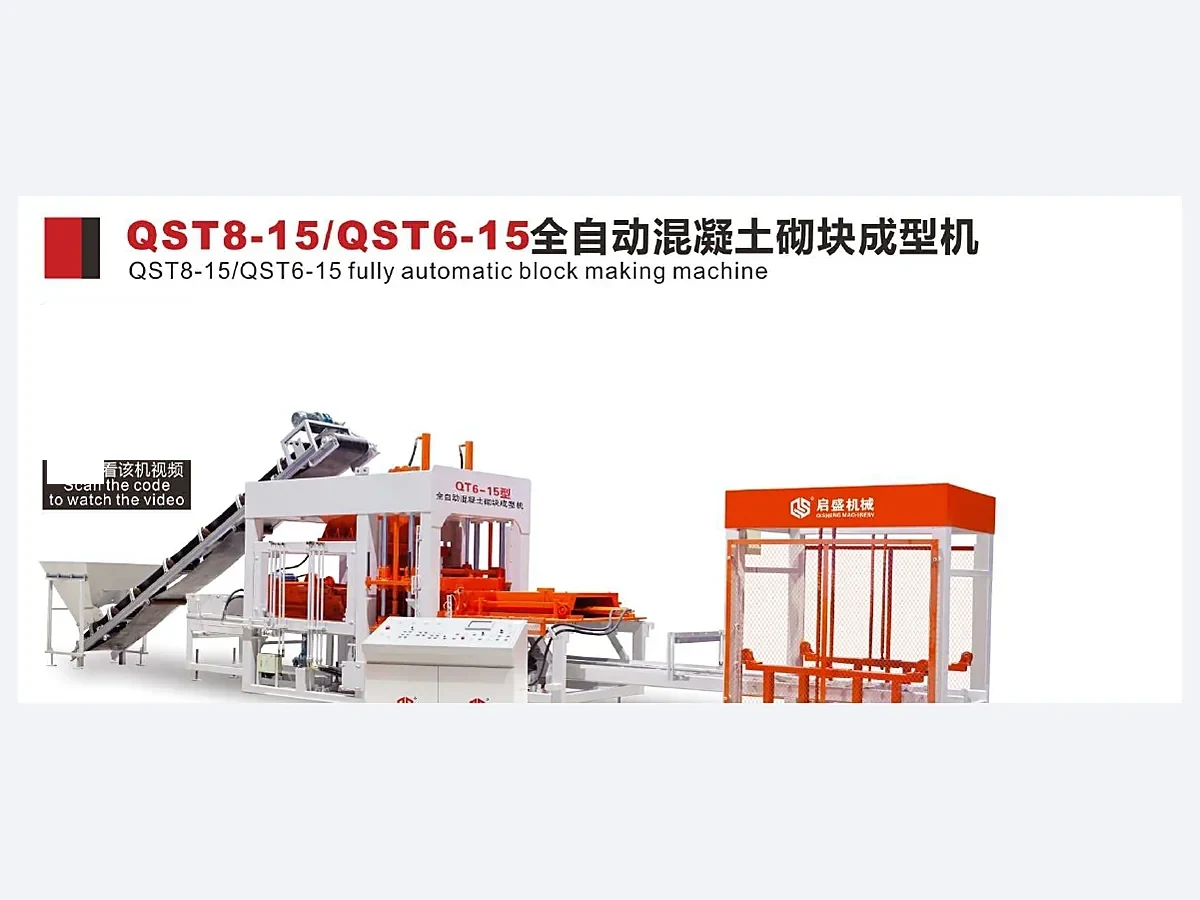
QST8-15 / QST6-15, QST8-15 / QST6-15 Fully Automatic Block Making Machine
QST8-15 / QST6-15

QST8-15 / QST6-15 Fully Automatic Block Making Machine

The entry-level workhorse, the lowest investment way into automatic block production, with genuine imported hydraulic and electrical components.

  • Up to 90,000 standard bricks / 8-hour shift (QST8-15)
  • 2 models
View details
WhatsApp Us