Product Description
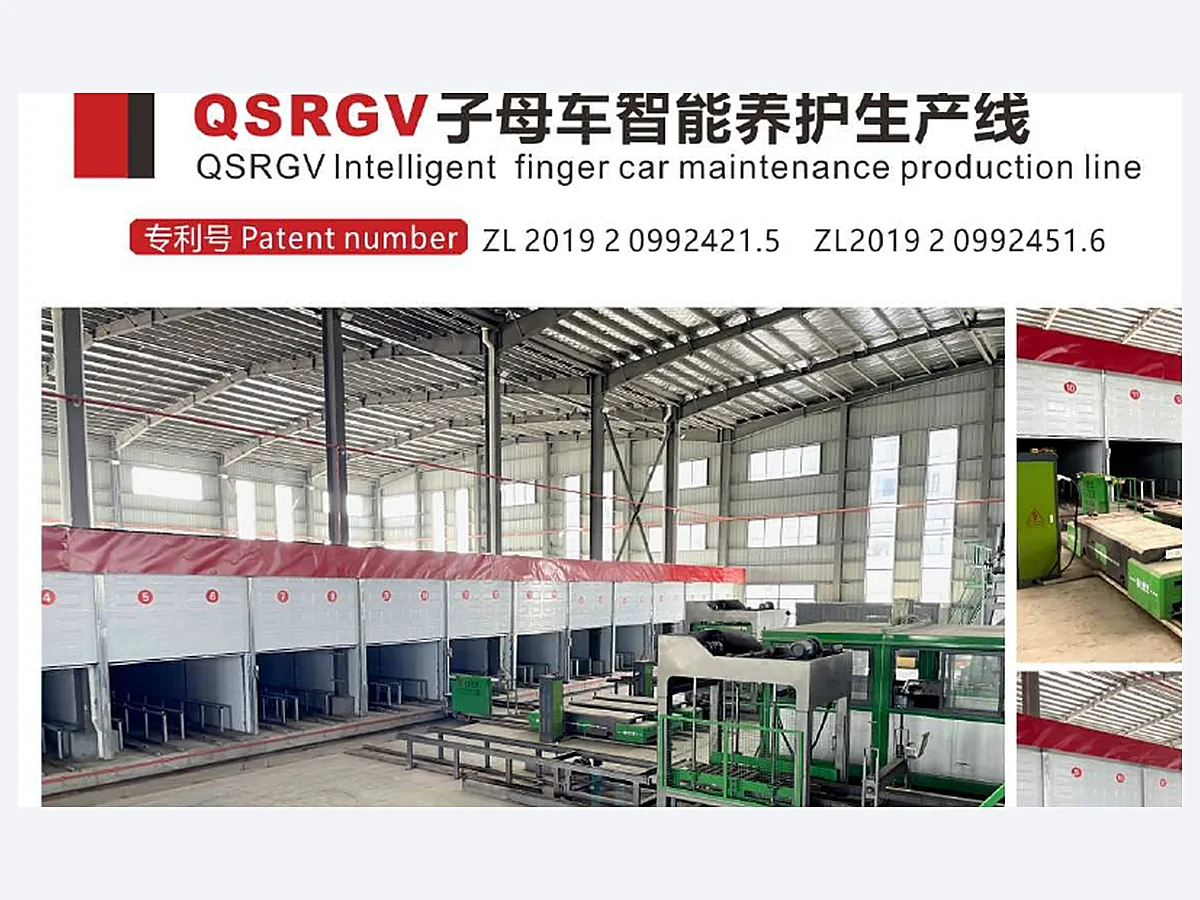
<p>The QSRGV mother-and-child vehicle intelligent curing line is an upgrade of the traditional chain-type shuttle car line. It carries several national patents, it switches between single-layer and multi-layer curing modes, and it is built to run a curing yard without operators. It is a core unit for plants moving toward unmanned, intelligent production.</p><h2>Dual-Power Drive: Rail and Battery</h2><p>The system runs on two power schemes. In rail-powered mode, 380V AC is stepped down to a safe 36V DC by a dedicated transformer, giving a stable and secure supply along the track. In lithium battery mode, a 36V pack drives the daughter vehicles, paired with a BMS battery management system that handles automatic charging and safety protection. The dual scheme keeps the line working even where cable routing is awkward.</p><h2>Positioning and Fleet Coordination</h2><p>Each daughter vehicle carries an encoder that calculates travel distance in real time, reaching millimeter-level positioning precision. One mother vehicle can be matched with several daughter vehicles, and they coordinate over networked signals. That cluster scheduling keeps every stack aligned at the right curing station and hands off brick stacks steadily from station to station.</p><h2>Unmanned Control and Remote Monitoring</h2><p>PLC plus touch-screen control runs the whole system, with light sensors and smart sensors feeding the loop. On a fault, the system shuts down, raises an alarm and displays the fault location, so no specialist has to walk the line to find it. A remote control system and cloud data transmission let managers follow the line from the office and handle maintenance or faults from a distance, which cuts reliance on manual labor and lowers operating cost.</p><h2>Fit, Customization and Staffing</h2><p>The line works with any model of block-forming machine, so new and existing equipment integrate without trouble. It can also be customized to a plant's site conditions and capacity targets. After the upgrade, only three to four workers are needed to complete the production tasks, well below a traditional curing line.</p><h2>Why the Upgrade Pays Off</h2><p>Compared with a traditional curing line, the QSRGV raises working efficiency and lowers reliance on manual labor. The system reacts to faults on its own and reports to the office over the cloud link, so a plant avoids long stoppages while an operator walks the yard looking for a problem. Rail and battery power also let the layout adapt to tight or awkward sites without heavy rewiring.</p>